Trusted VS Factory Agent · 1:1 Super Clone Watches


Which Royal Oak Reference Should You Even Buy: 15400, 15500, or 15510?
I get this question more than almost any other one in my inbox, and honestly it’s the right place to start.
Before you argue about VSF versus APSF, you need to know which reference you actually want. The movement inside changes with each one — and that’s where the whole game is won or lost.
Quick version: the 15400 is the older 41mm Royal Oak, runs the cal.3120, discontinued on the gen side. The 15500 replaced it in 2018 and moved to the newer cal.4302. The 15510 is the current one — same 4302 base, a few cosmetic tweaks, and the reference most of my US clients ask for in 2026.
If you want the watch AP is actually selling at the boutique right now, it’s the 15510.
So when a factory tells you their “Royal Oak” runs a 3120, that’s a 15400-era build. When they say 4302, that’s a 15500 or 15510. Keep that straight and half the confusion on the forums disappears.
Real talk — I’ve shipped probably 80 of these in the last two years, and almost every refund or swap I’ve ever processed traced back to someone buying the wrong reference, not a bad build.
VSF vs APSF Royal Oak: The Movement Is Where They Split
Both VSF and APSF make a genuinely good Royal Oak. I’ve sold both for years, so this isn’t me trashing one to push the other.
But they are not the same watch under the dial — and the difference matters more than the marketing makes it sound.
One thing you have to know before we go further, because it changes the whole calculation in 2026: APSF got raided by local police about two months ago and is fully shut down right now. What’s left on the market is clearance stock — whatever was already built before the doors closed. Once that dries up it could be gone for good, or they resurface in a year, nobody knows. We’ve seen this exact movie play out with Clean Factory. So when I talk up APS below, understand you’re shopping a discontinued, last-of-the-stock situation — not a factory you can reorder from.
Heads up.
APSF — the factory that used to go by AZ — basically built its reputation on the Royal Oak. They inherited the old 3120 tooling and rode the 15400 to fame, then moved to a Shanghai-made 4302 one-piece movement for the 15500 and 15510. Their headline feature is a true free-sprung balance with a weighted (variable inertia) balance wheel — no regulator index at all, which is exactly how the gen does it. Power reserve on the Shanghai 4302 sits around 50 hours.
VSF came in later and went a different route: a Dandong-made 4302 with a power reserve of about 70 hours, which actually matches the genuine spec. The catch? VSF doesn’t run a true free-sprung setup — they hide the regulator rather than delete it.
So on paper APS is “more correct” on the regulation system, but VSF is more correct on power reserve and, as you’ll see in a second, on the rotor.
| Detail | VSF (Dandong 4302) | APSF (Shanghai 4302) |
|---|---|---|
| Power reserve | ~70h (matches gen) | ~50h |
| Regulation | Hidden regulator (not truly free-sprung) | True free-sprung, weighted balance |
| Rotor 8-hole color | Steel — correct for 15510 | Rose gold pass-through — 15500 part, wrong on 15510 |
| Dial versions | Newer release, very clean QC | Up to V4, strong color range |
If you want the longer breakdown of how these factories stack up across models, I wrote about it here: VS Factory vs ZF Factory.
Why the Tapisserie Dial Is Where Most Royal Oak Reps Fail
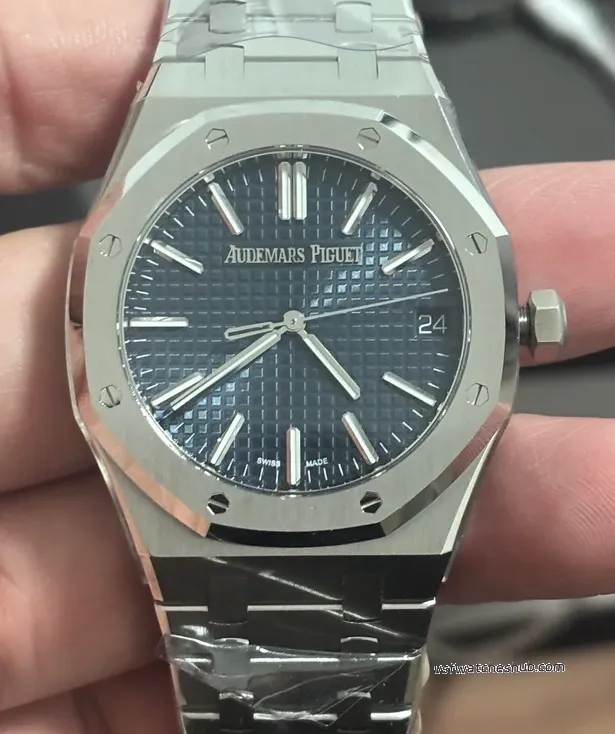
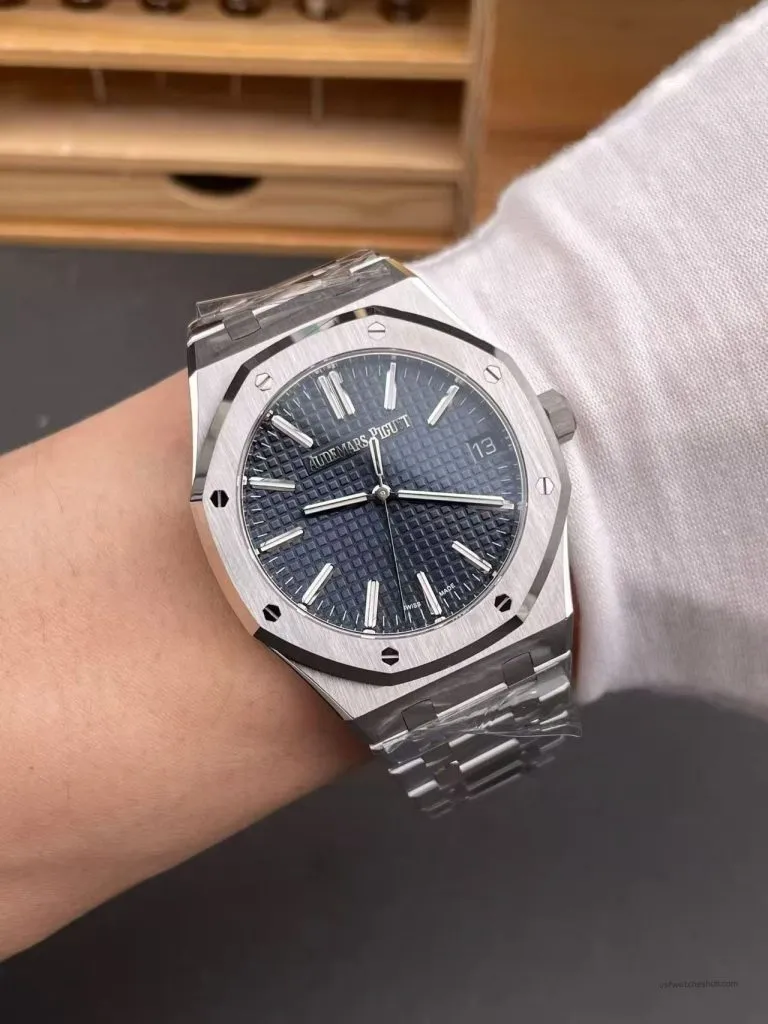
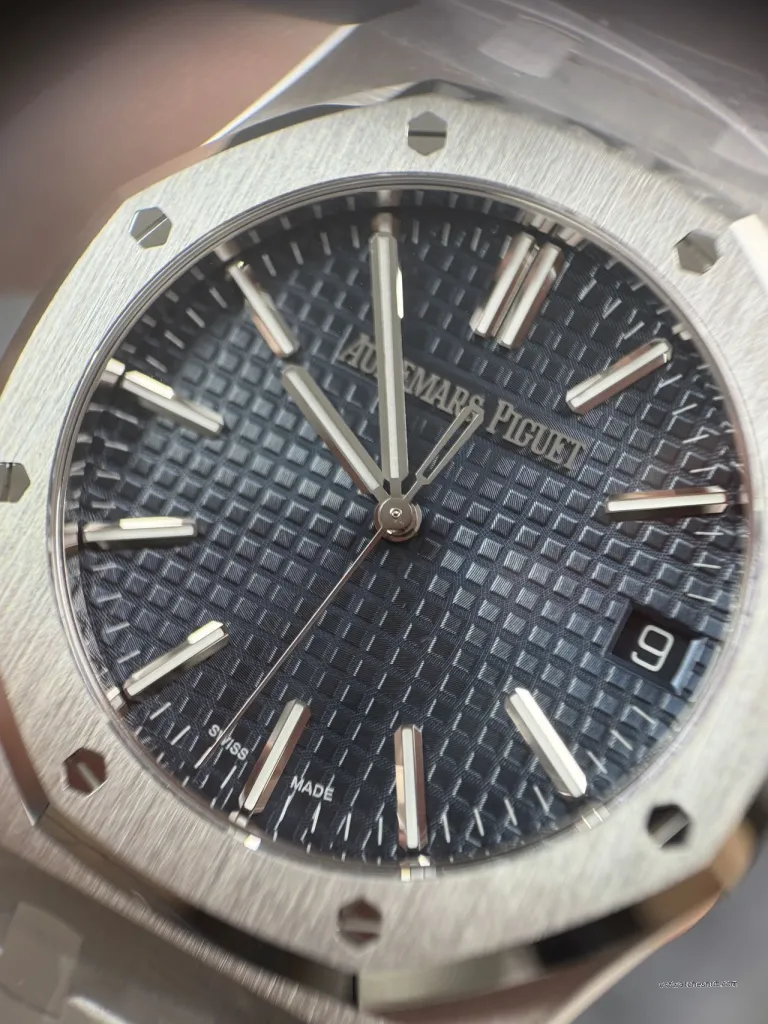
The “Grande Tapisserie” dial is the soul of a Royal Oak, and it’s the single hardest thing to clone.
On a genuine piece, every little square is a tiny pyramid — the top is a fine frosted matte, the sloped sides are mirror-polished, and the whole thing throws shadow and depth as the light moves. That 3D effect is what makes the dial look alive.
Most factory dials are mold-pressed. The grid comes out shallow, edges go soft and rounded, and you lose that pyramid shadow — it reads flat under indoor light.
This is exactly why a cheap Royal Oak rep looks “off” even to someone who can’t explain why. The dial is doing the snitching.
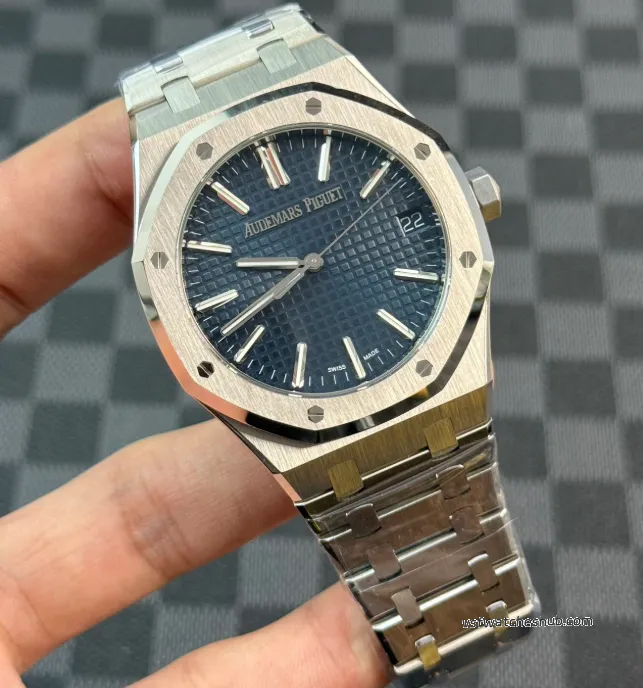
Credit where it’s due: APSF has been chasing this for years and is now on their fourth dial revision (V4). The color range is strong and the texture is the best they’ve done. But hold a gen next to it and you’ll still catch two tells — the APS squares run a touch small with narrow slopes, so the proportion feels slightly busy, and the “Swiss Made” text sits a hair low (too much gap above, too little below) instead of centered between the grid. VSF’s later dials clean up the spacing, which is part of why I lean VSF on the steel-bracelet blue and gray.
Honestly, last month a client in London emailed me four loupe photos of his V4 dial side by side with a gen he’d handled at a Mayfair AD. He couldn’t see the Swiss Made offset until I circled it for him. That’s how close APS got. But it’s still there.
The Rotor Detail That Tells You If Your 15510 Is Actually Correct
This is the nerdy one. It’s the detail I personally check on every Royal Oak before it ships.
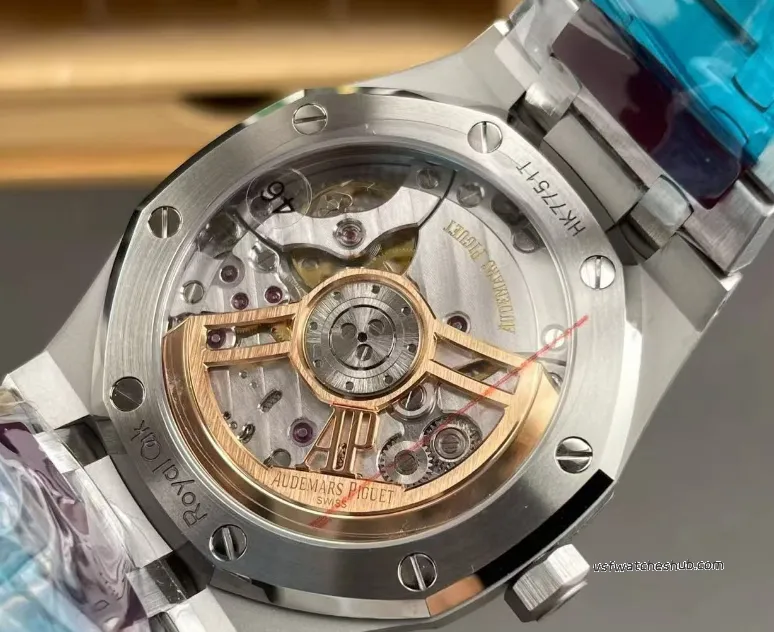
Flip the watch over and look at the rotor — specifically the eight small holes in the bearing ring.
On a genuine 15510, those eight holes are steel-colored and non-pass-through. On a genuine 15500, they’re rose-gold and pass-through (open). They are two different parts.
Here’s the problem: APSF reused the 15500 rotor on their 15510, so you get rose-gold pass-through holes on a watch that should have steel holes. Small thing, sure — but for a buyer who knows the reference, it’s an instant “that’s not the right one.”
VSF got this correct — steel-colored holes on the 15510, matching the gen. Same logic on the balance bridge layout: the newer one-piece movements put the balance wheel at the 7–8 o’clock position like the genuine, instead of the old 9015 clone-board movements that sat it at 6 o’clock and screamed “fake” to anyone paying attention.
If a seller is still shipping a 9015-based Royal Oak in 2026, walk away.
15500 vs 15510: What Actually Changed and Which One I’d Buy
People assume the 15510 is a big upgrade over the 15500.
It’s not.
They share the same case footprint, the same 4302 base, even the same case corners. AP changed the rotor part, tweaked some bracelet details, and refreshed the dial lineup. That’s most of it.
So which do you buy? My honest take for a 2026 client: go 15510 if you want the current reference and you might wear it around people who know watches — it’s what AP sells today, and on a good VSF build every detail lines up. Go 15500 if you specifically love one of the older dial colors or you find a great deal, because the watch itself is excellent and nobody’s going to call you out on a 15500 being a 15500.
Had a client named Andre down in Miami last spring who came in dead set on the 15500 blue because that’s the one his buddy had. Two weeks after it landed he messaged me to say he was glad he didn’t “upgrade” to the 15510 — to his eye the blue 15500 dial just hit better in person.
Reference snobbery is real on the forums. But on the wrist? Buy the dial you actually like.
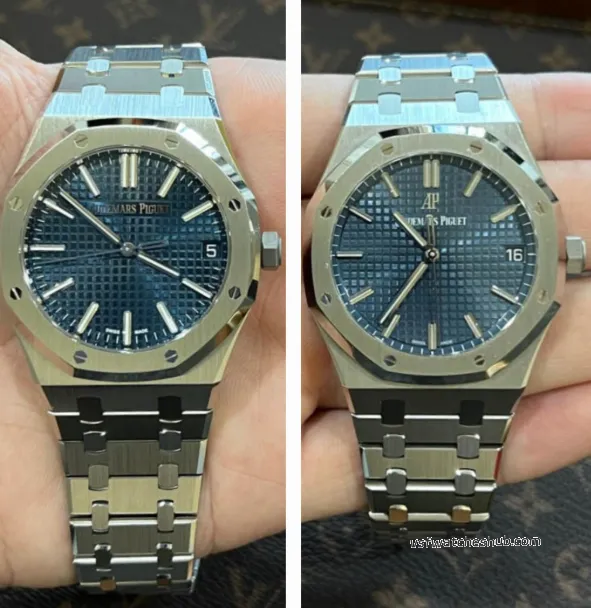
If you want to see the exact pieces I keep in stock, the blue steel ones are here: VSF Royal Oak 15510 Blue Tapisserie and VSF Royal Oak 15500 Blue.
What a Royal Oak Super Clone Actually Costs in 2026
Let’s talk money, because this is where people get either ripped off or scared off.
A top-tier VSF or APSF Royal Oak on the steel bracelet lands in roughly the $350–$500 dealer-price range depending on the dial, the version, and whether you want the free-sprung movement upgrade. APSF’s latest V4 free-sprung-with-weighted-balance build used to run a small premium — about $50 over their standard version for that movement work — but with the factory shut down, that version is getting hard to source and clearance pricing swings both ways: some sellers mark the last pieces up, others dump them to clear shelves.
For reference, the genuine 15510ST has a boutique price north of $25,000 and a grey-market price well above that. So you’re looking at the silhouette, the dial, and the bracelet feel of a $25k watch for a few hundred. That’s the whole pitch.
What you should not do is chase the $150 “Royal Oak.” At that price you’re getting a 9015 clone-board movement with the balance in the wrong spot, a shallow mold-pressed dial, and a bracelet that rattles. It’ll look fine in a phone photo and disappoint you in week one.
The gap between a $150 rep and a $400 super clone on this particular model is enormous — bigger than on almost any Rolex. The Royal Oak punishes shortcuts.
Out of the last 20 RO complaints I’ve seen on Reddit, 17 were people who bought sub-$200 builds and thought they were getting the same thing. They weren’t.
Browse the full lineup in our Audemars Piguet super clone collection if you want to compare dials and versions side by side.
Which Royal Oak Super Clone Should You Buy in 2026?
Here’s how I actually advise clients, no fence-sitting.
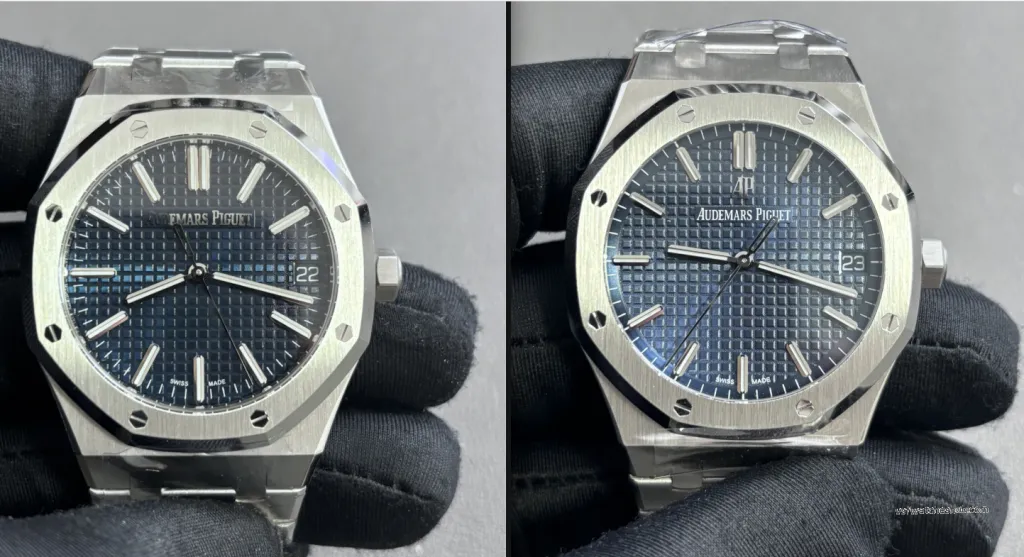
If you want the current reference with the most correct exterior details — steel rotor holes, cleaner Swiss Made spacing, gen-matching 70-hour power reserve — VSF’s 15510 is my default pick, and it’s what I’d put on my own wrist. It’s also the practical one: VSF is still in production, so stock, restocks, and after-sales are all there.
APS’s V4 with the true free-sprung movement is still the connoisseur’s pick on paper, but with the factory shut down you’re hunting leftover clearance pieces, the rotor isn’t reference-correct on the 15510 anyway, and once they’re sold out there’s no reorder. Find a clean APS at a fair price and love that movement? Grab it as a collector’s piece. Otherwise VSF is the safe, repeatable buy.
For a 15500, both factories are excellent and it really comes down to the dial color you want.
Out of the last batch of Royal Oaks we shipped, the steel blue and gray 15510s had basically zero comebacks — return rate well under 1% on that reference specifically. This is a model I’m confident standing behind, which I can’t say for every rep out there.
Whatever you pick, buy from someone who actually checks the rotor and the dial before it ships, not a link in a Telegram group. If you’re not sure where to start, I put together a guide on where to buy VSF watches and which dealers to trust.
And if you’ve got a specific dial in mind — message me. I’ll tell you straight whether VSF or APS does that exact reference better, even if it’s not the one I’m holding in stock.

Related Products
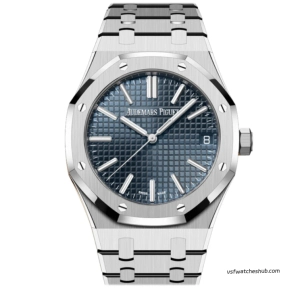
Audemars Piguet Royal Oak 15510ST.OO.1320ST.06 Blue Tapisserie Dial - VS Factory Super Clone 1:1 Replica
$890$1,11020% OFF
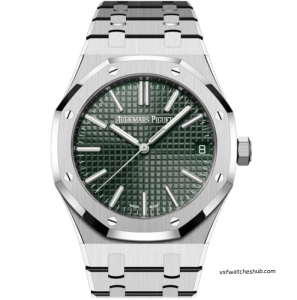
Audemars Piguet Royal Oak 15510ST.OO.1320ST.09 Green Dial Stainless Steel - VS Factory Super Clone 1:1 Replica
$890$1,07017% OFF
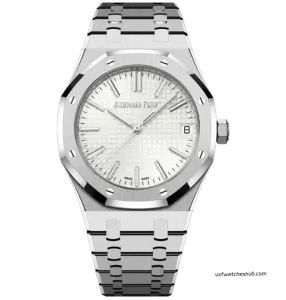
Audemars Piguet Royal Oak 15510ST.OO.1320ST.08 Silver Dial Stainless Steel - TOP Factory Super Clone 1:1 Replica
$700$83016% OFF
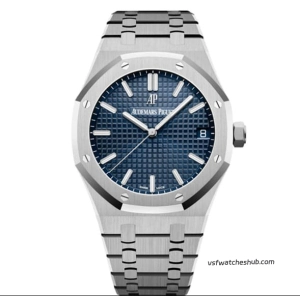
Audemars Piguet Royal Oak 15500ST.OO.1220ST.01 Blue Dial Stainless Steel - VS Factory Super Clone 1:1 Replica
$840$1,05020% OFF
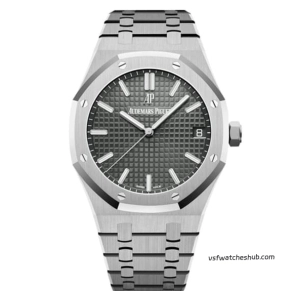
Audemars Piguet Royal Oak 15500ST.OO.1220ST.02Gray Dial Steel Bracelet - VS Factory Super Clone 1:1 Replica
$850$1,06020% OFF
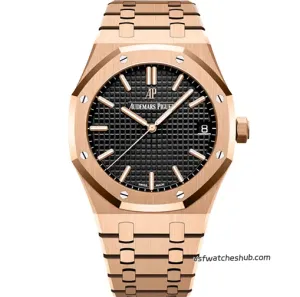
Audemars Piguet Royal Oak 15500OR.OO.1220OR.01 Rose Gold Black Dial - PPM Factory Super Clone 1:1 Replica
$1,140$1,43020% OFF