Trusted VS Factory Agent · 1:1 Super Clone Watches


The Ultimate Showdown
Free-Sprung vs. Regulated
Which One Comes Out on Top?
What is the fundamental difference between a regulated balance and a free-sprung balance? And why is the free-sprung design so often seen as the more advanced of the two? Today we put them head to head in an in-depth comparison.
Difference One
What Gets Adjusted
Regulated: The adjustment is made on the hairspring. Moving the regulator (the index) changes the effective working length of the hairspring. The longer the working section of the hairspring, the longer the oscillation period and the slower the watch runs; the shorter it is, the faster the watch runs.
Free-sprung: The adjustment is made on the balance wheel. The length of the hairspring is fixed, and the moment of inertia of the balance wheel is changed by adjusting the screws on the balance (turning them in or out) or the weights (rotating their eccentric position). The greater the moment of inertia, the longer the oscillation period of the balance and the slower the watch runs; the smaller it is, the faster the watch runs.
Difference Two
Stability of Accuracy
This is the core difference between the two, and it is where the free-sprung design has its advantage.
Regulated: For the regulator to be able to move, there has to be a certain amount of clearance for the hairspring between the two regulator pins. As the balance and hairspring oscillate, the hairspring touches the inner pin at some moments and the outer pin at others within that gap.
This irregular contact makes the torque delivered by the hairspring non-linear, which produces “isochronism error” – meaning the rate of the watch is not consistent at different amplitudes (for example, when fully wound versus when the mainspring is nearly run down). In addition, an external impact can shift the regulator and affect timekeeping accuracy.
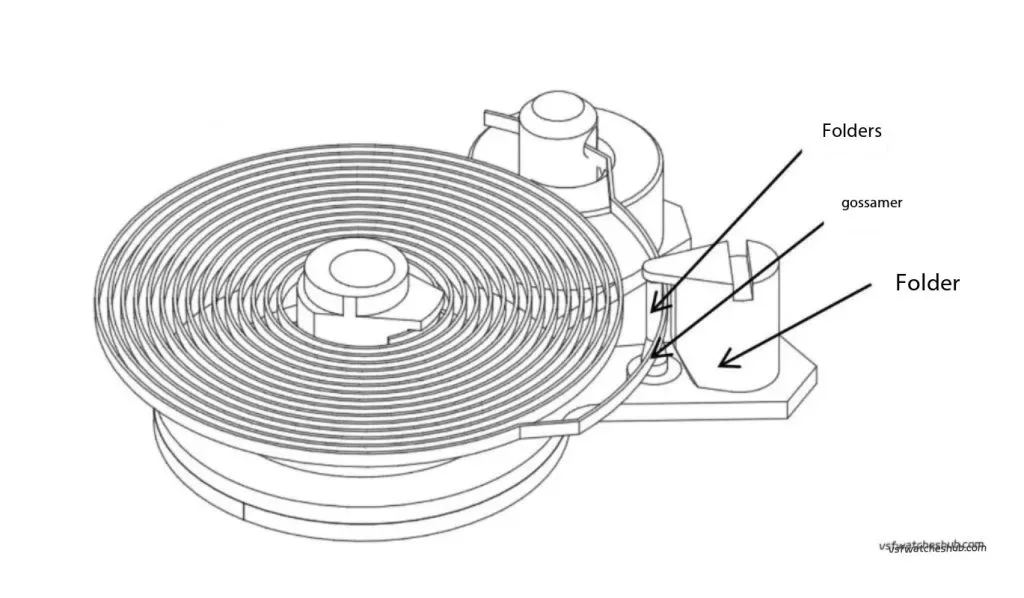
Diagram of the hairspring’s play between the inner and outer pins
Free-sprung: The regulator is eliminated entirely. Both the inner and outer ends of the hairspring are fixed, so its working state is extremely stable. This removes the interference caused by the regulator pins at its root and gives the balance and hairspring better isochronism. And because there is no regulator that can be knocked out of position, a free-sprung movement holds its accuracy longer when it is subjected to external shocks.
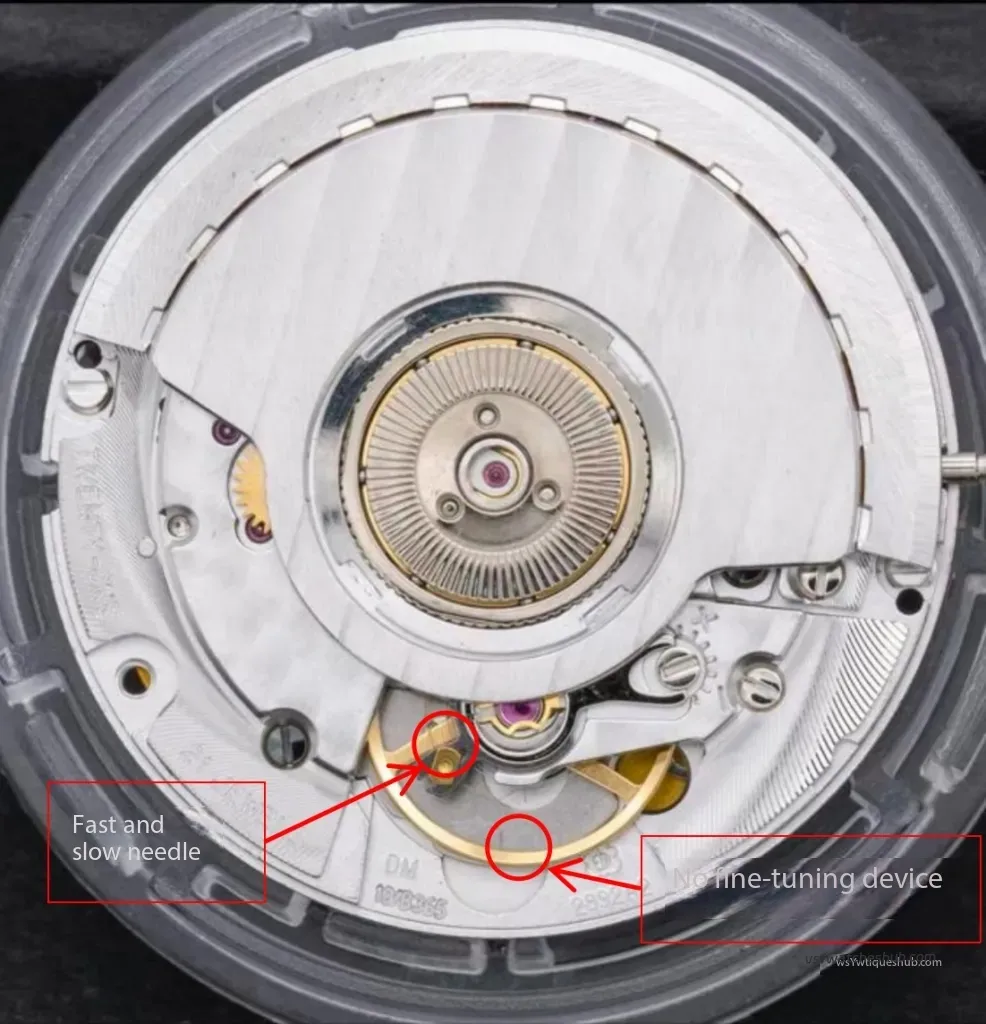
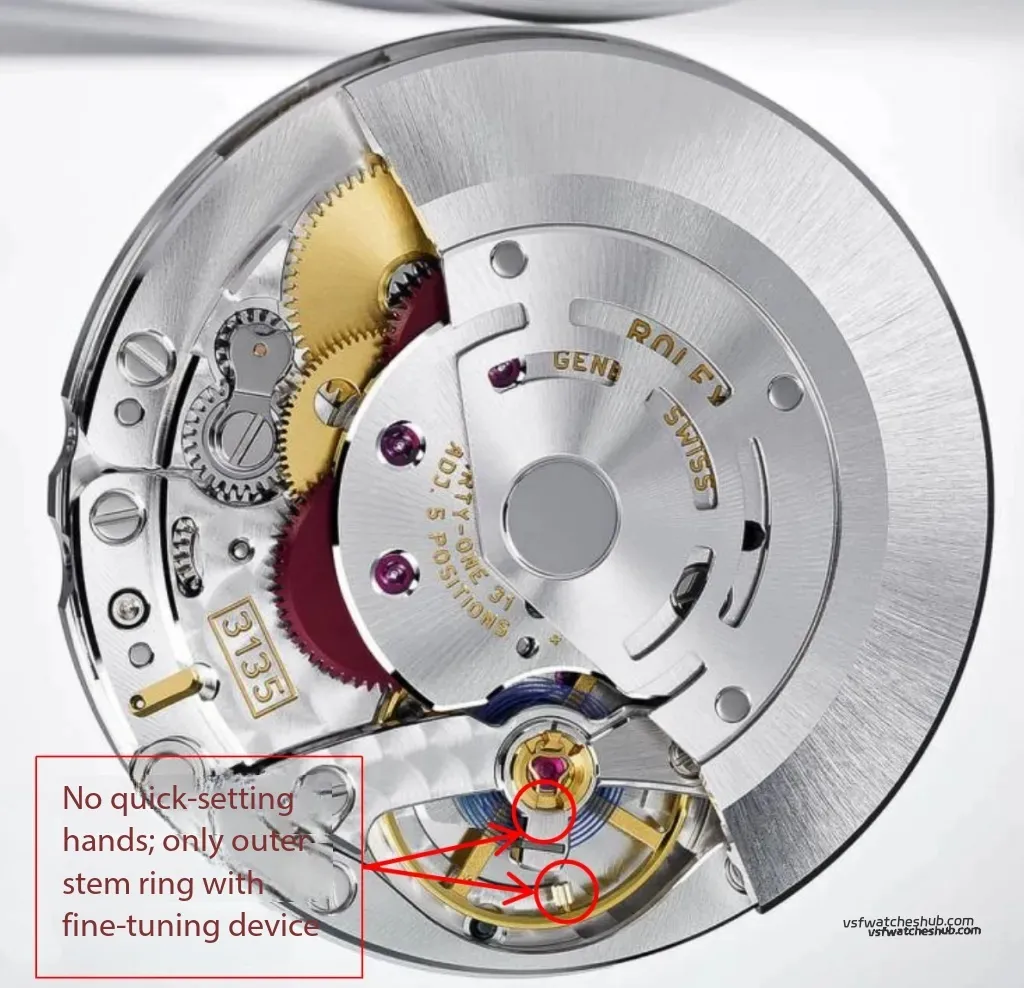
ETA 2892 compared with Rolex 3135
Clearing Up a Misconception:
Is a Regulated Movement Always Inaccurate?
Not necessarily. We cannot judge by structure alone. Some movements from top brands such as A. Lange & Söhne and Glashütte Original still use a regulated design, paired with a finely made swan-neck fine adjustment. Through top-level workmanship and materials, these movements achieve very high accuracy as well. The advantages of a regulated design are that it is easy to adjust and efficient to produce, which makes it suitable for large-scale production.
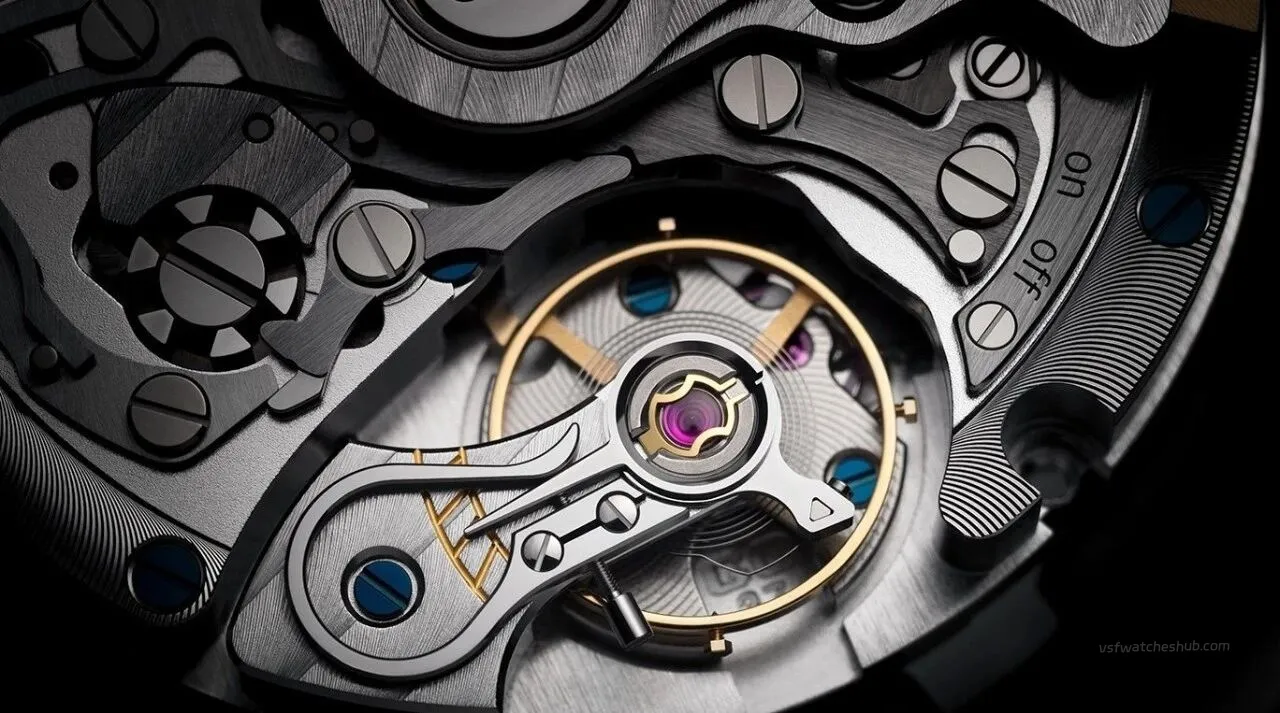
Close-up of the Glashütte double swan-neck
Conclusion: In resistance to disturbance, long-term stability and control of isochronism error, the free-sprung design has an inherent advantage in its physical structure. That is why it has become the first choice for chronometer-certified movements and high-end watches.

Ray Li——VSF
RELATED POSTS
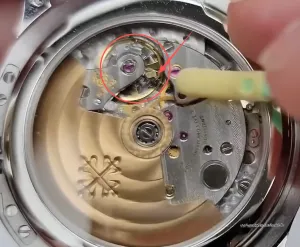
Super Clone Free Sprung Movements: What’s Real and What’s Just a Cover Plate

VS Factory Daytona Movement Guide: How to Spot a Real Dandong 4131 (5-Photo Cheat Sheet)
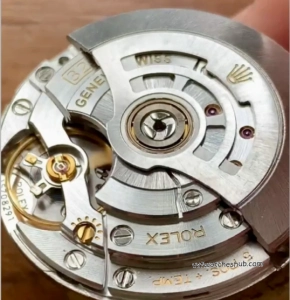
VS Factory Rolex 3235 Movement Review, Accuracy, Power Reserve and Comparison Guide
VSF Watches Guide: VS Factory Watches Explained
What Does VSF Mean? VS Factory Watches Explained (2026 Guide)