Trusted VS Factory Agent · 1:1 Super Clone Watches


What a Regulator Actually Is, and What “Free Sprung” Means
Customers ask me this constantly. They read a factory spec sheet, see the words “free sprung,” and want to know whether it matters. So here it is, from the inside.
Open any caseback and look at the balance wheel — the part that swings back and forth. Sitting right next to it there’s a small arm, usually with a yellow or gold tip. That’s the regulator. Chinese collectors call it the ka du. You push it one way, the watch runs faster. Push it the other way, it runs slower. That’s the entire job.
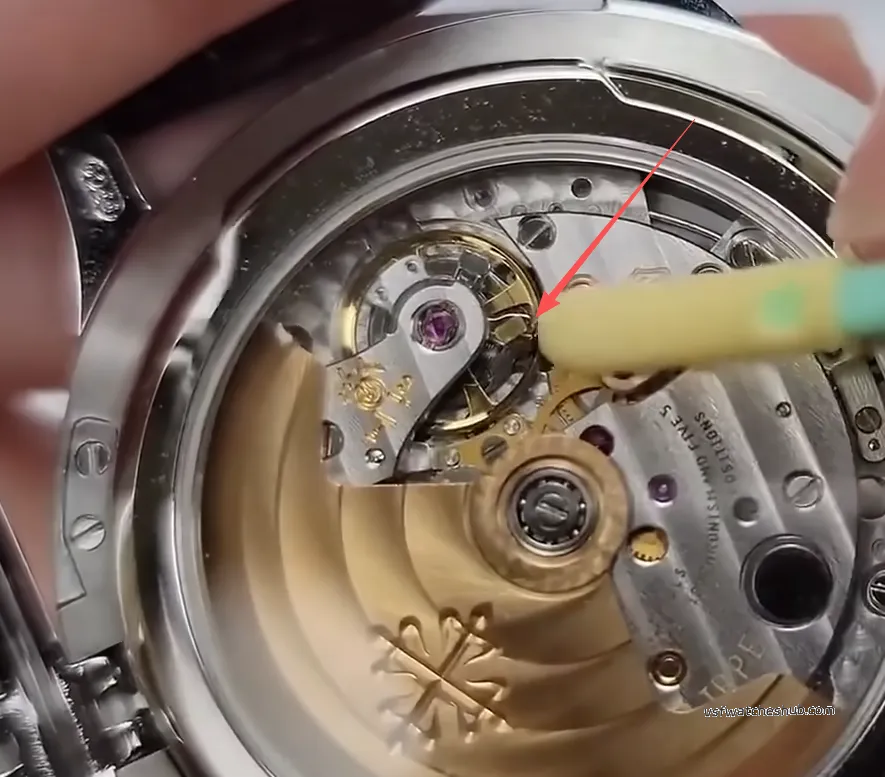
There’s a second small post next to it that adjusts the hairspring stud. Different part, different job, ignore it for now.
Free sprung means that arm isn’t there. Nothing to push.
So the obvious question: if there’s no arm, how do you adjust the watch?
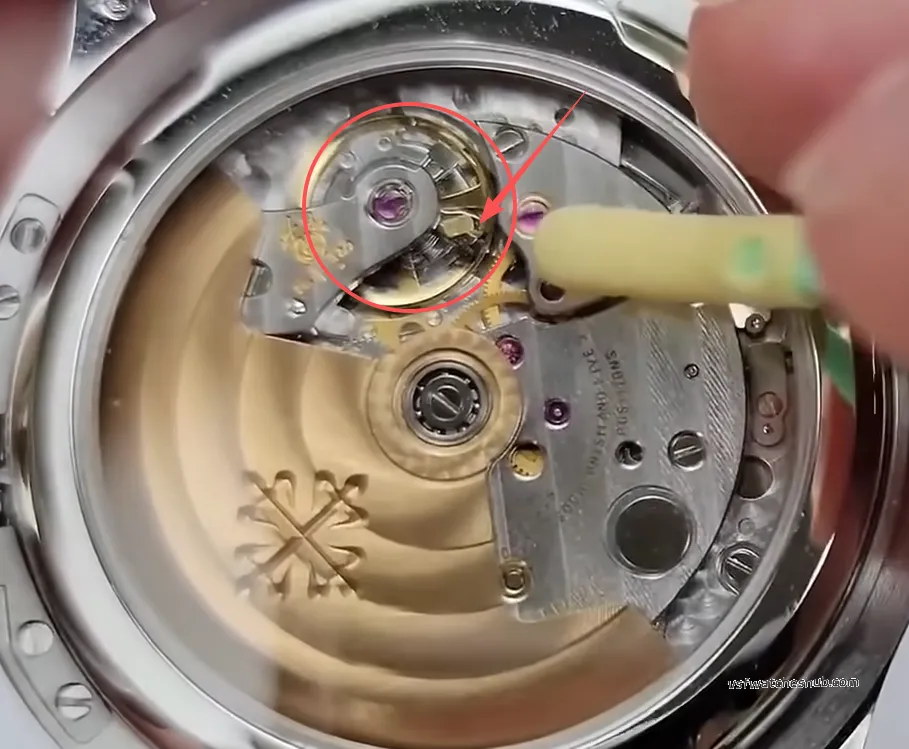
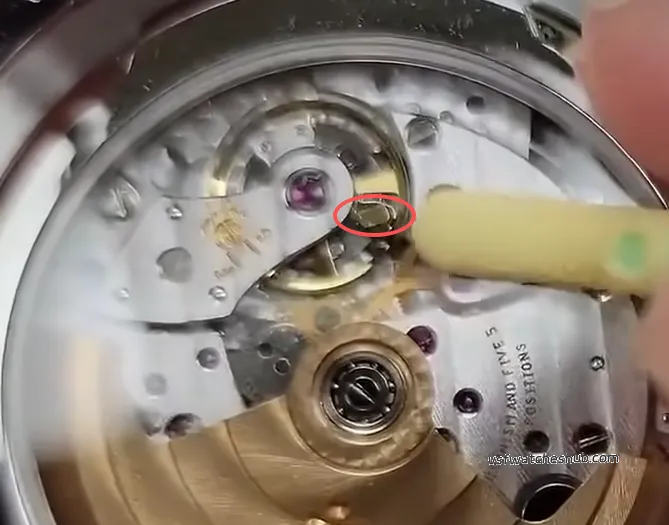
You adjust the balance wheel itself. Look closely at a free sprung balance and you’ll see tiny screws set into the rim. Those are weights. A watchmaker uses a dedicated tool to turn them in or out, which changes the mass distribution of the wheel, which changes how fast it oscillates. Same physics as a pendulum — move the weight, change the period.
A regulated movement does the opposite. It doesn’t touch the balance at all. It pinches the hairspring shorter or longer, which does the same thing from the other direction.
Free Sprung Isn’t Better. It’s Just Prettier.
This is where most of the marketing falls apart.
Neither system is better than the other. They’re two ways of doing the same job. What’s actually true is that free sprung is harder to adjust — it needs specialised tools and a watchmaker who knows what they’re doing, which means higher service costs down the line, and higher pre-sale adjustment costs for whoever is setting the watch up before it ships.
Swiss watches use both. ETA and the whole Sellita SW family are regulated. Omega’s 1863 is regulated. Meanwhile the in-house calibers from the top brands — Rolex’s own movements, Patek’s 324, Jaeger’s 925 — those tend to be free sprung.
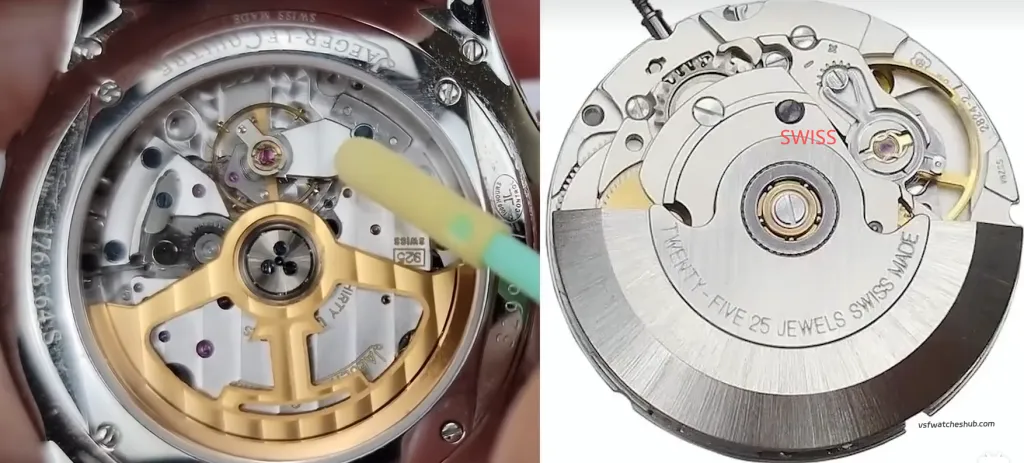
Which is where the reputation comes from. High-end movements aren’t always free sprung, but free sprung movements are almost always high-end. People saw the correlation and decided it meant performance.
It doesn’t. It means it looks correct through a display back. That’s it.
If you want to argue that there’s a real accuracy difference, fine, you win, I’m not going to fight you on it. But I’ve handled a lot of both and I’ve never seen it show up in the numbers.
Why No Factory Builds a Real One
Here’s the part nobody explains properly. The reason replica factories don’t produce genuine free sprung movements isn’t the manufacturing cost. It’s the adjustment cost.
A regulated movement takes a technician one or two minutes to dial in. Push the arm, check the rate, done.
A free sprung movement is a gamble. Sometimes it’s quick. Sometimes you’re turning those tiny weights for half an hour to get it inside spec. Multiply that by a production run and the labour cost becomes absurd for a watch selling in the hundreds.
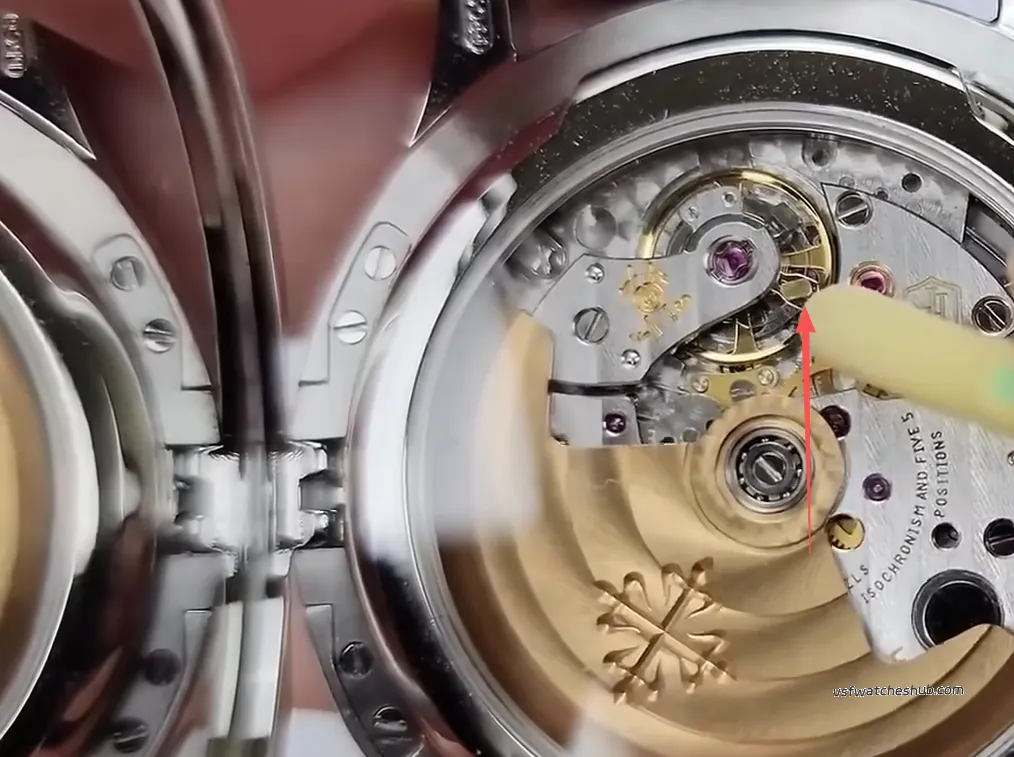
So the honest summary is this: unless you physically replace the balance and hairspring assembly with genuine Swiss parts, every “free sprung conversion” you’ve been offered is cosmetic. And genuine parts are expensive enough that a single small assembly can cost several times what the whole watch cost you.
The Cover Plate Trick — and Yes, VS Does It Too
Three things get sold as “free sprung” in this market. The first comes straight from the factory.
The Shanghai 3135 and 3235 use this approach. So do the Seamaster 300 movements from VS and from OR.
What they actually did: they built a small cover plate, tucked the regulator arm underneath it, and mounted a little stud on top of the plate so it reads like a hairspring adjuster at a glance. The regulator is still in there. You can still see it if you know where to look.
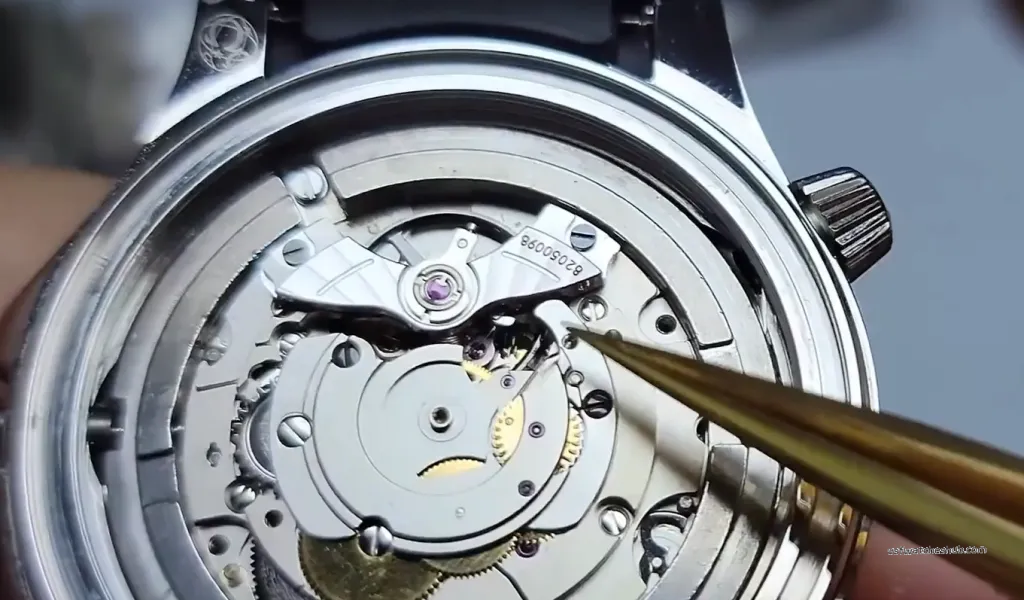
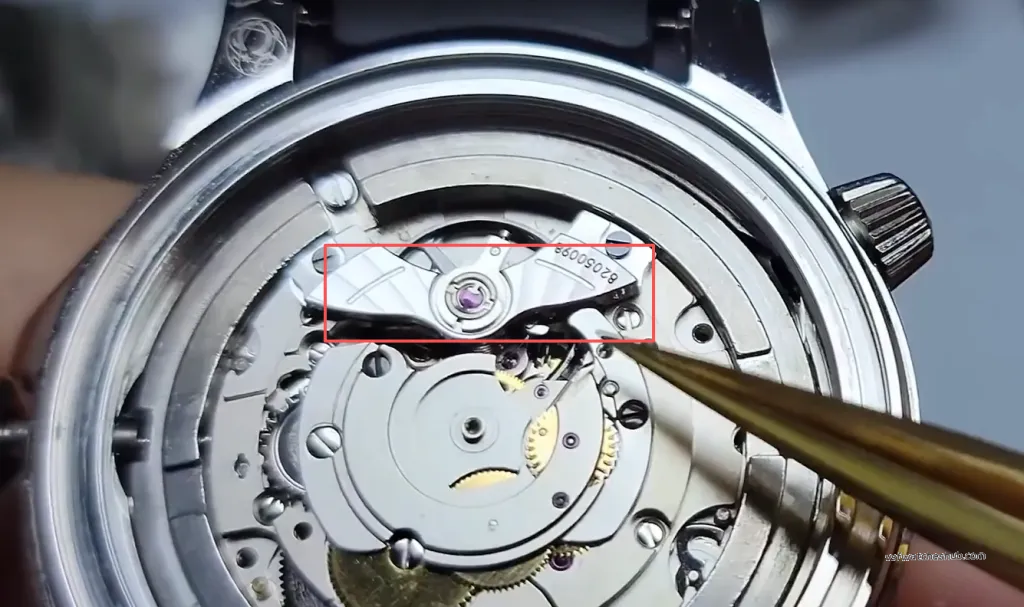
I sell VS. I’m a VSF partner and most of what leaves my warehouse is VSF. And I’m telling you the free sprung on that Seamaster is a cover plate. It’s built to be looked at, not to be used.
OR went further — they cut away part of the 2824’s automatic bridge to make the layout read closer to genuine.
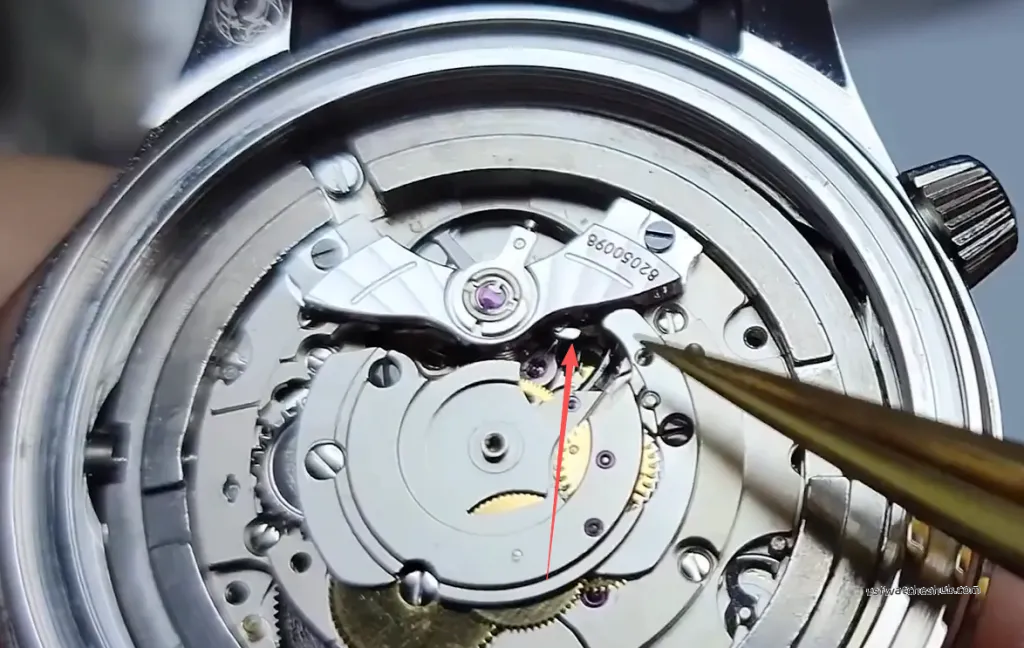
The Chinese collector who took these apart on camera called it covering your ears to steal a bell. Pretending nobody can see what you’re obviously doing. I think that’s about right.
Ripping the Regulator Arm Out
The second version is what independent watchmakers and modders do, and it’s the one I get asked about most. Somebody offers to “convert your movement to free sprung” for around $15 to $30 in labour.
What they do is physically remove the regulator arm. That’s the whole procedure.
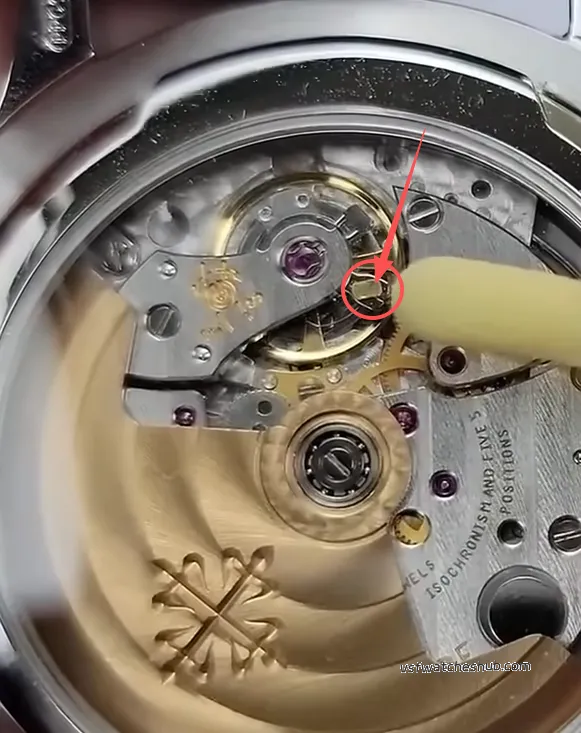
Think about what that leaves you with. You’ve just deleted the only part that lets anyone adjust the watch. Your timing is now whatever it was the day the arm came off, permanently.
And people tell me they don’t care — nobody uses a mechanical watch to actually tell the time anymore, it’s 2026, they just want it to look right. Fine. But look at what a real free sprung balance has: no regulator arm, a hairspring stud, and weights set into the balance rim.
Can you drill a replica balance wheel and thread in timing weights? You can’t. Nobody’s doing that on a production movement.
So you’re left with a balance that has no arm and no weights. Which isn’t a free sprung movement. It’s a regulated movement with a part missing, and anyone who knows the difference will spot it in two seconds.
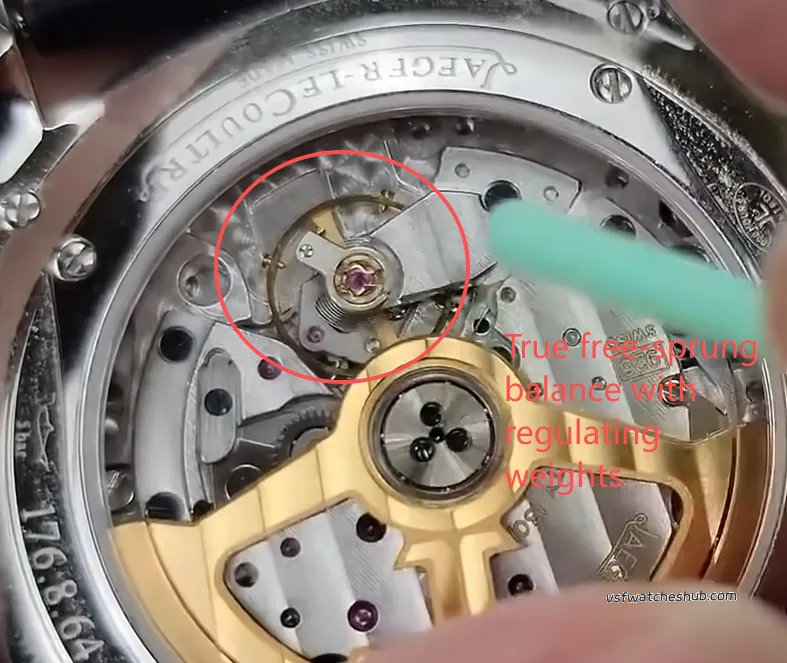
My database of factory teardowns has the same warning from a different angle: modded free sprung conversions hurt stability, push up failure rates, and widen the daily rate. So you’re paying to make the watch look slightly more correct to a person who probably can’t tell, while making it run worse and become unadjustable.
Somebody’s going to say the screws don’t matter, nobody looks that closely. My honest take: to someone who knows movements, it’s obvious. To someone who doesn’t, none of this was ever visible in the first place. So who exactly is the mod for?
The One Version That Actually Works
Option three is the only one with any engineering behind it: you replace the entire balance and hairspring assembly with genuine Swiss parts.
This one is real. It doesn’t compromise the movement — it improves it. A genuine Swiss balance and hairspring will give you better rate stability and better accuracy than anything the clone came with. That part is not marketing.
Then you look at the price. For a 3135 or a 3120, that assembly runs somewhere between $850 and $1,700, and sometimes past $1,700 depending on what you can source.
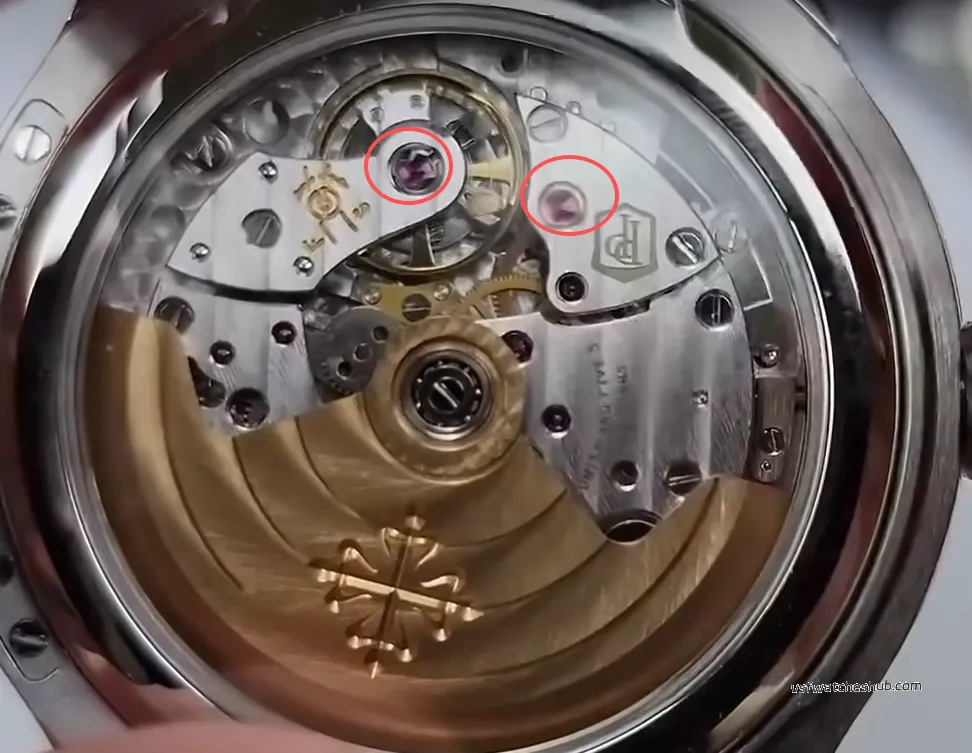
Your watch cost maybe $400. You’re now considering a $1,700 part.
There’s one case where I’d say it’s defensible. Most Rolex models are closed caseback — nobody is ever going to see the movement. If you do this on a closed-back watch, you’re not buying looks, you’re buying antimagnetic performance and rate stability, and those are real, measurable gains. That’s a legitimate reason.
Worth noting the same logic shows up in my factory notes independently: free sprung only earns its keep on display-back models. On a closed caseback there’s no cosmetic argument at all, only the mechanical one.
On a Display Back, You Still Lose
Now the display-back case, which is where most people want this.
Swap in a genuine balance and hairspring, and the movement is still going to read as a clone. Because the giveaway was never the balance. It’s the finishing — the plates, the bridges, the perlage, the edges. A $400 watch is not going to have the movement finishing of a six-figure Patek. That was never on the table.
You could go further and replace the upper bridges and plates with genuine Swiss components. At that point the movement really would pass. And at that point you should stop and ask what you’re actually building, because the parts bill is going to be terrifying.
One exception worth knowing about, because it cuts the other way: a handful of very high-end custom builds — the ACE324 is the one I’ve seen up close — genuinely did it properly. One stud instead of three, real timing weights on the balance, functional, correct to genuine. So it can be done. It just tells you what tier you have to be shopping in before it becomes possible, and it’s not the tier anyone reading this is shopping in.
If You Own a Display Back, Here’s the Better Move
Say you’ve got a display-back piece — a Nautilus 5711, an AP 15400, something in that family — and you genuinely want it to hold up under inspection.
Don’t mod the balance. Buy a genuine movement and genuine dial and hands, and drop those in instead.
I’ll give you the numbers so you can see where this goes. A genuine 324 was around $20,000 last year and it’s gone up since. A 3120 is somewhere in the $5,000 to $10,000 range depending on who you ask. Nobody actually does this, and the reason nobody does it is that the gap to a genuine movement isn’t large enough to justify the spend.
But if you’re going to spend money on this watch at all, that’s the version that works. You spend less than a full genuine and you get something that holds up. Even then — swap everything except the case and it’s still a replica. That hasn’t changed.
Is it worth it? Honestly, more worth it than snipping off a regulator arm and calling the result free sprung. At least after this one, somebody who knows movements can pick it up and struggle to call it.
Spending tens of thousands on a replica, though — that’s a level of collecting I don’t understand. Doesn’t mean I disagree with it. Everybody’s reasons are their own.
What I’d Tell a Customer
If you’ve bought a replica, wear it. That’s what it’s for.
Don’t keep modding it. The money goes nowhere. If you have that kind of budget sitting around, put it toward the genuine piece and be done.
And if you still want the conversion after all this — go ahead. Nobody’s stopping you. It’s not my money and it’s not anyone else’s, we’re all just here watching.
I wrote this for two reasons. One, people keep asking me what a regulator is and I wanted something I could just send them. Two, I’d rather you kept the money.
Go spend it on something you’ll actually enjoy.

Ray Li——VSF
RELATED POSTS
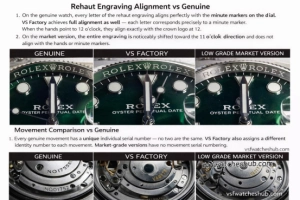
Which Is Better: VS Factory or Clean Factory Replica Watches?
VSF Omega Aqua Terra 150M Review: VS8800 Movement vs Genuine (38mm & 41mm)
Many customers often ask: what’s the difference between replica watches at different price levels?
VSF Watches Guide: VS Factory Watches Explained
What Does VSF Mean? VS Factory Watches Explained (2026 Guide)